


The short answer
Most wine cooler problems come from a short list of causes: a failing fan, a worn door gasket, a faulty sensor or control board, a clogged condenser, or a sealed-system issue. A technician can usually narrow it down in one visit, and on a premium built-in unit repair is often the better choice than replacement, unless the sealed system has failed on an older model.
A built-in wine cooler that runs warm, swings in temperature, or frosts over can put a collection at risk. Viking Appliance Services repairs built-in and undercounter wine storage in Reseda, Tarzana, Encino, Northridge, Van Nuys, Canoga Park and surrounding San Fernando Valley neighborhoods. We work on Viking, Sub-Zero and Thermador wine units, and we see plenty of kitchens where Wolf cooking equipment sits next to a Sub-Zero wine column. We are an independent repair company with no brand affiliation. Our goal is to find the actual cause, explain it plainly, and help you decide whether the unit is worth fixing.
Issues we fix
Wine storage is less forgiving than a regular refrigerator. A few degrees of drift or a humidity problem may not look urgent, but over time it can affect corks and aging. These are the symptoms homeowners usually call us about:
- Not cooling, or holding a temperature several degrees above the set point
- Temperature swings, or one zone of a dual-zone unit running warmer than the other
- Frost or ice building up on the back wall or evaporator cover
- Water pooling inside the cabinet or under the unit, often from a blocked condensate drain
- Condensation or fogging on the glass door
- Display errors, blank displays, or controls that don't respond
- Fans that are loud, rattling, or not running at all
- Compressor running constantly, or clicking on and off without cooling
- Door that won't seal, or a door alarm that keeps going off
- Interior lights out, or vibration that keeps disturbing the bottles
What our technician checks on a built-in unit
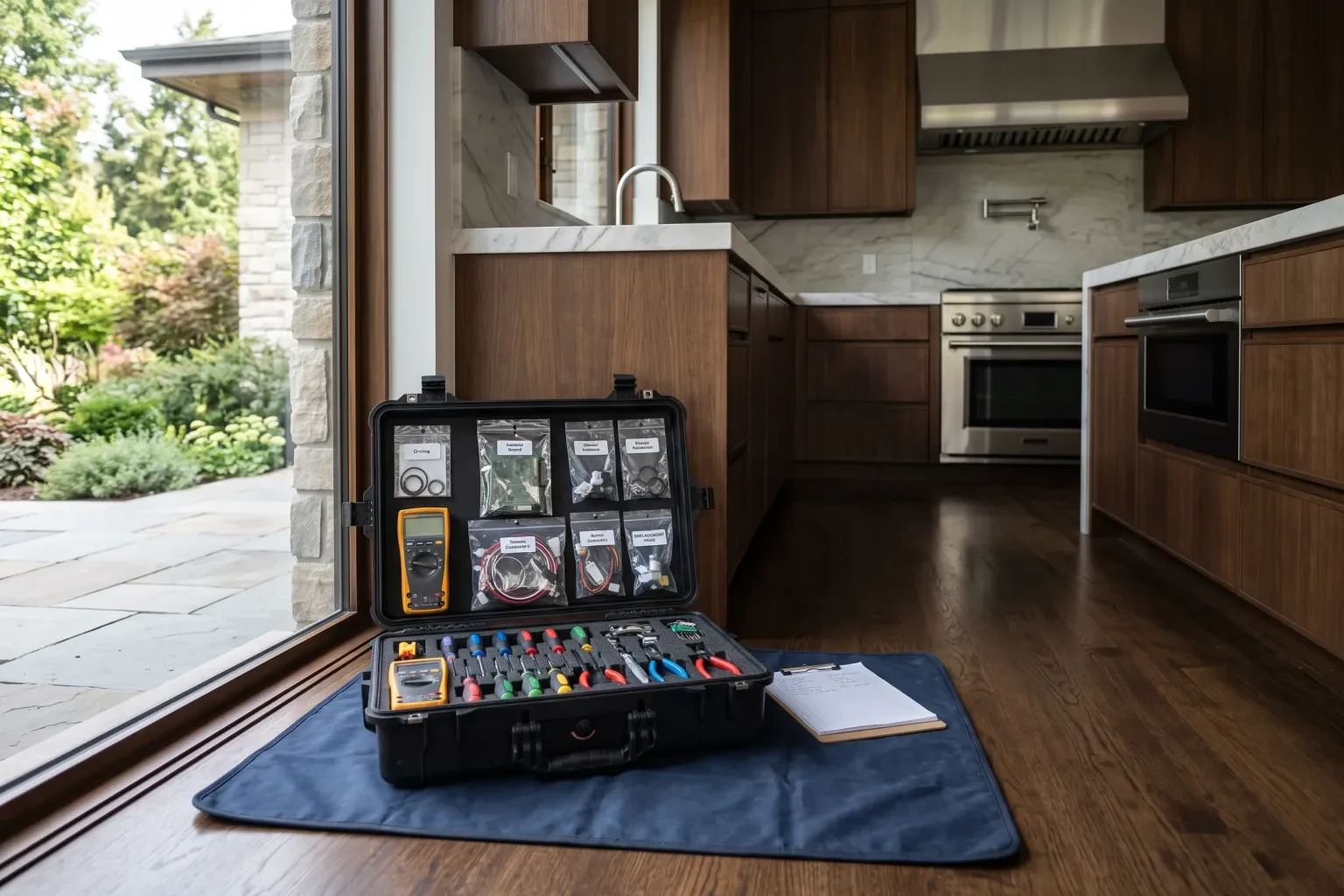
Built-in and professional-style wine coolers are designed to sit flush in cabinetry, so airflow and access matter as much as the parts themselves. We start by confirming the complaint with a thermometer reading in each zone, then work through the system in order.
We inspect the door gaskets and hinges for gaps, check that the unit is level, and look at the front grille and toe kick for blocked airflow. We clean or check the condenser coil, which collects dust and pet hair and makes the compressor work harder. That matters here, because inland valley neighborhoods like Reseda run much hotter in summer than areas near the coast. We test the evaporator and condenser fans, the temperature sensors, the defrost components, and the control board. When the evidence points to a sealed-system problem, we check the compressor and look for signs of a refrigerant leak or restriction.
How Viking, Sub-Zero, Wolf and Thermador units differ
Viking undercounter wine and beverage units are common in Valley kitchens. On these we often trace complaints to the fans, the sensors, door alignment on heavily used doors, and condensers clogged because the front grille is blocked or rarely cleaned.
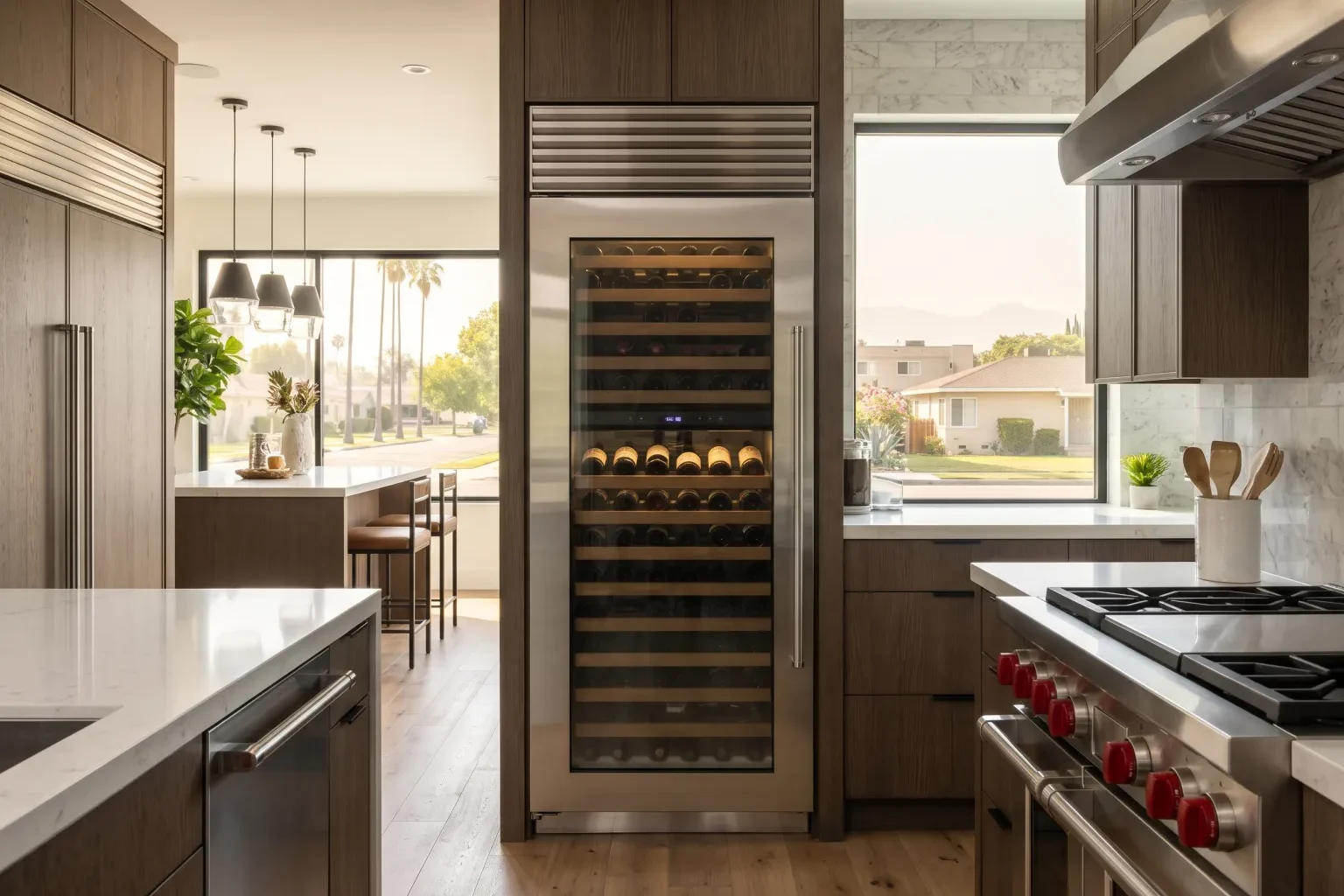
Sub-Zero wine storage, including full-height columns and undercounter dual-zone models, relies on fairly sophisticated electronic controls and separate zone management. When one zone drifts, we look closely at the sensors, the dampers or fans that serve that zone, and the control system before suspecting the sealed system.
Wolf makes cooking equipment, not wine storage. If you have a Wolf range or wall oven, your wine unit is most likely a Sub-Zero, and we can service it alongside your other appliances on the same visit.
Thermador wine columns are often fully integrated behind custom panels. Typical issues involve controls, fans, and drainage, and access tends to be the bigger factor because the panel and trim must be handled carefully to reach the components.
Tell us what your appliance is doing.
Repair or replace a high-end wine cooler?
A built-in wine unit is designed around a specific cutout and often a custom panel, so replacing it isn't as simple as sliding in a new appliance. A different model may not fit the opening, and cabinetry changes add time and disruption. For that reason, repairing a premium unit usually makes sense when the problem is a fan, gasket, sensor, control board, drain, or hinge.
Replacement becomes worth considering when an older unit has a failed compressor or a significant refrigerant leak, when parts for that model are no longer available, or when the cabinet itself is damaged. We'll tell you what we found and what each path involves, then leave the decision to you.
What affects the cost of a repair
We don't quote a repair until we've diagnosed the unit, because the same symptom can have very different causes. Several factors shape the final cost:
- The fault itself: a dirty condenser or blocked drain is a different job than a sealed-system repair
- Parts: control boards and brand-specific components cost more than gaskets or fans, and some parts must be ordered
- Access: fully integrated units in custom cabinetry may need panels removed or the unit pulled out with care
- Number of zones: dual-zone units have more sensors, fans and controls to test
- Whether a follow-up visit is needed to install ordered parts
How a service visit works
When you contact us, we'll ask for the brand, model and serial number if you can find them, usually on a label inside the cabinet, plus a description of what you're seeing. That helps us bring the right tools and, where possible, likely parts.
At the visit, the technician confirms the symptoms, runs through the diagnostic checks above, and explains the cause and your options before any repair begins. Simple fixes are often completed the same day. If a part needs to be ordered, we schedule a return visit. Until then, it helps to move your most valuable bottles to a stable, cool spot and avoid opening the door more than necessary.