


The short answer
Most built-in freezer problems, such as frost buildup, warm temperatures, ice maker failures and error codes, come from a specific component that can be repaired without replacing the whole unit. We diagnose Viking, Sub-Zero and Thermador freezers in place, explain the fault and the repair, and give you an honest view on whether a fix makes sense.
When a built-in freezer stops holding temperature, you have hours, not days, before the food inside is at risk. Viking Appliance Services repairs freezers in Reseda and nearby San Fernando Valley communities. We focus on high-end built-in, column and professional-style units from Viking, Sub-Zero and Thermador, and we also service the Wolf cooking equipment often installed in the same kitchens. We are an independent repair company with no ties to any manufacturer. We find the actual fault, explain it in plain terms, and tell you what the repair involves before any work starts.
Issues we fix
Freezer trouble usually starts small. You might find a soft ice cream carton, a new layer of frost, or a display that flashes for no clear reason. Catching these signs early often keeps a minor repair from turning into a larger one. These are the symptoms homeowners call us about most:
- Freezer runs but doesn't get cold enough, or the temperature drifts during the day
- Frost or ice building on the back wall, around the door opening, or on food packages
- Water pooling under the unit, or a sheet of ice forming on the compartment floor
- Ice maker not producing, making small or hollow cubes, or leaking
- Compressor running nonstop, or clicking on and off without cooling
- Buzzing, rattling or fan noise from the top grille or behind the unit
- Door that won't seal, won't close on its own, or sags under a heavy custom panel
- Error codes, a flashing display, or a temperature alarm that keeps sounding
- No power at all, or lights on but no cooling
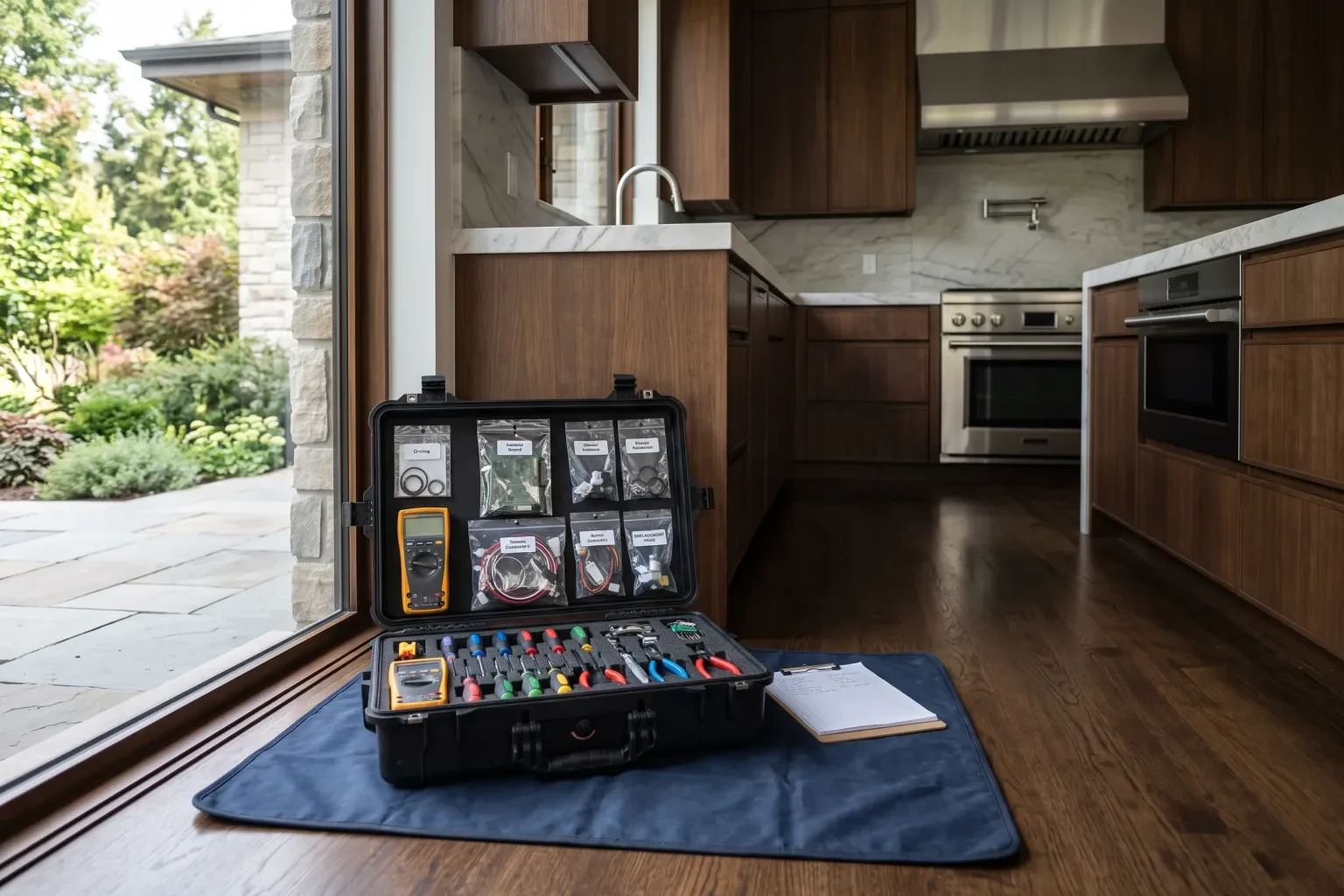
What our technician checks on a built-in or professional-style freezer
Built-in freezers are packed tightly into cabinetry, so we diagnose them methodically instead of guessing at parts. We start with the condenser. On many built-in units it sits at the top behind a grille, where dust and kitchen grease build up fast. We clean it, then check that the condenser fan moves enough air to carry heat away. Inland valley kitchens get hot in summer, and Santa Ana spells in the fall add more heat. A dirty or weak condenser struggles most in those conditions.
Inside the compartment, we check the evaporator fan and the full defrost system: the heater, the sensors or thermostat that control it, and the drain that carries meltwater away. A defrost failure is one of the most common reasons a freezer ices up and then warms up. We also measure compressor operation and temperatures across the sealed system to tell a refrigerant or compressor problem apart from an airflow or control problem.
Finally, we check the parts you touch every day. We inspect the door gaskets for tears and gaps, check hinge adjustment and how the door handles the weight of a custom panel, and confirm the unit is level. We read any stored error codes, test the control board and temperature sensors, and look at the ice maker's water valve, supply line and filter.
How Viking, Sub-Zero, Wolf and Thermador freezers differ
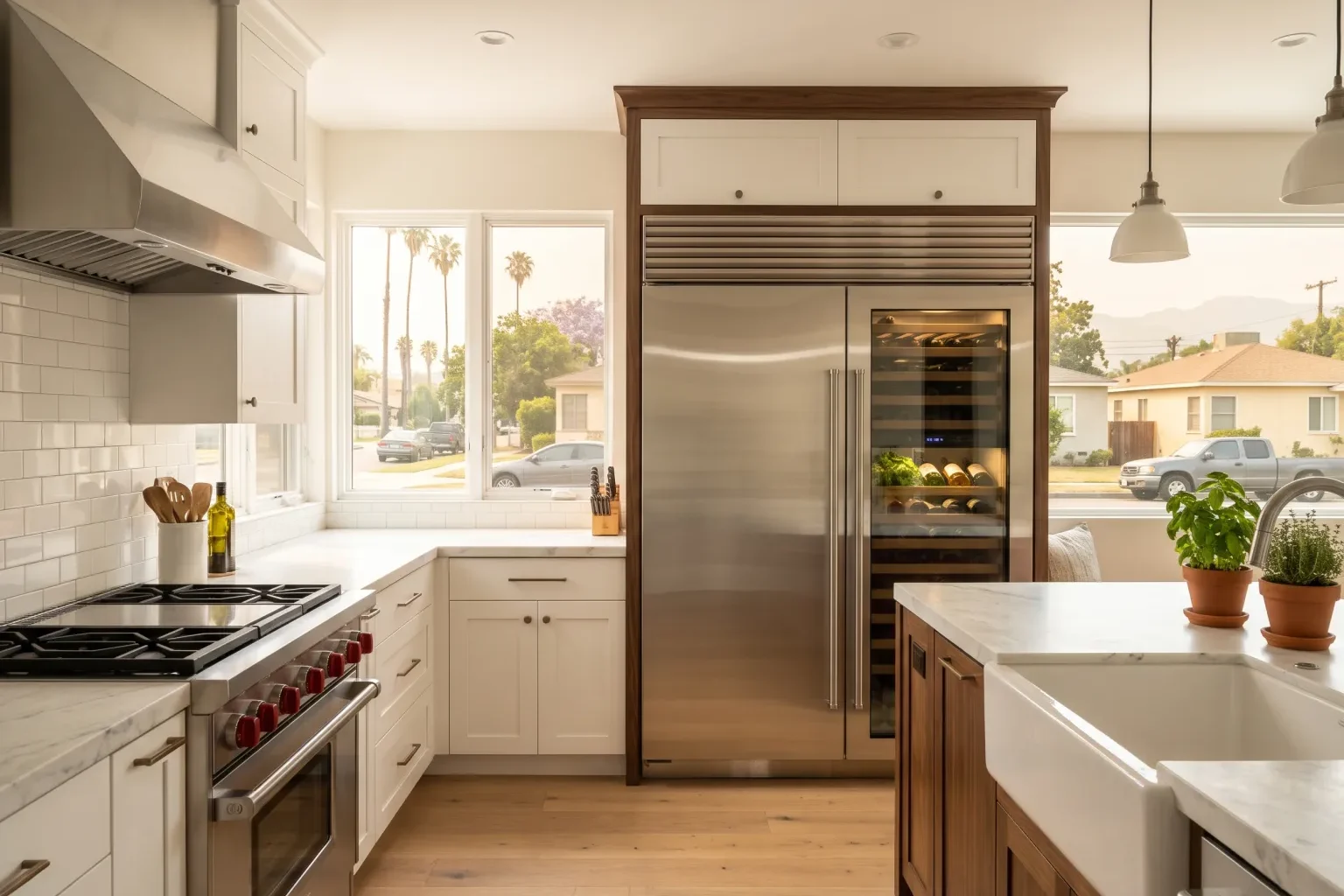
Viking makes built-in and column freezers in professional-style and panel-ready designs. On these units we commonly trace problems to condenser and evaporator fan motors, defrost components, and door alignment, especially where heavy stainless or wood panels put strain on the hinges. Newer Viking models depend more on electronic controls and sensors, so accurate diagnosis matters before ordering parts.
Sub-Zero built-in and integrated column freezers are built for long service lives. On many designs the condenser sits at the top, where dust collects quickly. Ice makers, water valves and door gaskets on integrated panel models are frequent service items. Sealed-system issues do happen, and they call for careful testing because the repair is more involved.
Thermador column freezers sit flush in cabinetry. That makes airflow and access important when we work on them. Electronic controls, temperature sensors and ice maker assemblies are where we tend to focus first.
Wolf makes ranges, ovens and cooktops, not freezers. We mention Wolf because many of our customers pair a Wolf range with a Sub-Zero or Viking freezer, and we can look at both on the same visit if you need it.
Tell us what your appliance is doing.
Repair or replace a high-end freezer?
With a premium built-in freezer, repair is usually the practical choice. These units are made to fit specific cabinet openings, often carry custom panels, and are designed to be serviced. Replacing one can mean new panels, trim work, or changes to the cabinetry if the new model's dimensions don't match. Most failures, including fans, defrost parts, sensors, gaskets, ice makers and control boards, are component repairs.
Replacement deserves a closer look in a few cases: a sealed-system failure on an older unit, parts that are no longer available, a cracked or badly damaged liner, or several worn systems failing at the same time. In those cases we lay out what the repair involves and what condition the rest of the unit is in, so you can decide with the full picture.
What affects the cost of a freezer repair
We give you a clear explanation of the repair before we begin, and several factors shape that figure. The first is the fault itself. A clogged defrost drain or a worn gasket is a different job from a compressor or refrigerant leak. Sealed-system work takes more time, specialized equipment and proper refrigerant handling.
Parts matter too. Some components for these brands are common, while others have to be ordered and may take time to arrive. Access is the third factor. A freestanding-style unit is simpler to work on than a fully integrated column surrounded by custom cabinetry, where we may need to remove panels or trim, or carefully pull the unit forward. Whether the job can be finished in one visit or needs a return trip for parts also plays a role.
How a freezer repair visit works
When you contact us, describe what you're seeing and, if you can, share the model and serial number. These are usually on a label inside the compartment or behind the top grille. That helps us come prepared.
At the visit, the technician diagnoses the unit, shows you what failed, and explains the repair and what it involves before doing any work. Many repairs are finished the same day. If a part has to be ordered, we schedule a return visit once it arrives.
Until then, keep the door closed as much as possible and move critical items to a cooler or a second freezer. Don't chip at heavy ice with sharp tools, because it's easy to puncture the liner or a refrigerant line.